
Education · 28 June 2026
Why read-aloud stories still matter in 2026 (even with AI)
In 2026, technology is everywhere, but the magic of a read-aloud story for kids remains irreplaceable. Discover how modern narration tools complement—rather than replace—the timeless bond of shared reading.
Turn reading practice into their story
Make a personalised book starring your child — a gentle way to build confidence with words they'll actually want to read.
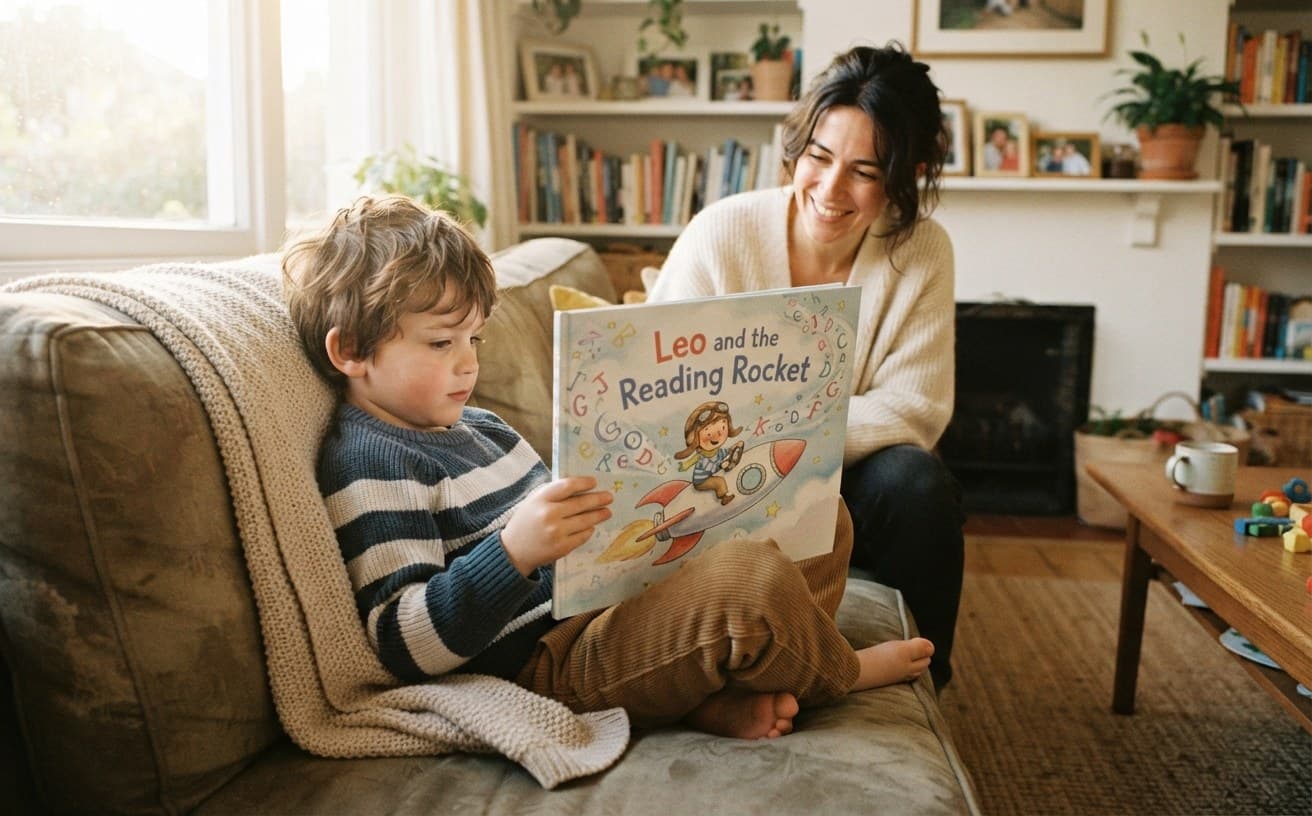
It is 2026. We live in an era of spatial computing, highly advanced artificial intelligence, and interactive screens that can simulate almost any environment imaginable. Yet, at the end of a long, bustling day, one of the most powerful tools for a child’s development remains beautifully simple: the sound of a voice telling a story.
As parents, we are constantly navigating the changing tides of technology. We wonder if we are doing enough, if we are screen-limiting correctly, or if we are preparing our children for a world that seems to move faster every day. Amidst all this digital noise, the traditional read aloud story for kids has not been left behind. In fact, it has become more vital than ever.
At TurtleTime, we believe that technology shouldn't replace the magic of childhood; it should protect and enhance it. Here is why read-aloud stories still matter in 2026, and how modern narration tools can beautifully complement—rather than replace—your family’s reading routine.
---
1. The emotional anchor: Bonding in a fast-paced world
Children today are growing up in a world of instant gratification. With algorithms designed to capture their attention at every turn, the quiet space of a shared story acts as an emotional anchor.
When you sit down to share a read aloud story for kids, you are offering your child your undivided attention. Even if you are using an AI-assisted narration tool to help guide the story while you cuddle, the physical closeness is what registers most deeply.
Listening to a story together releases oxytocin (the 'cuddle hormone') in both parent and child. It lowers heart rates, reduces cortisol levels, and signals to your child’s nervous system that they are safe, loved, and secure. In 2026, where the digital world can sometimes feel overwhelming, this low-stimulation, high-connection time is the ultimate antidote to daily stress.
2. Vocabulary acquisition and the 'auditory blueprint'
It is a common misconception that children only learn to read by looking at words on a page. Long before a child can decode letters, they are building an 'auditory blueprint' of language.
By listening to a read aloud story for kids, children are exposed to words, sentence structures, and grammatical patterns that they rarely hear in everyday conversation. Written language is naturally more complex than spoken language. When a story is read aloud with expression, children learn:
* Phonemic awareness: How different sounds (phonemes) blend together to make words. * Inflection and tone: How a change in pitch or speed can completely alter the meaning of a sentence (e.g., excitement, suspense, or sadness). * Context clues: How to deduce the meaning of an unfamiliar word based on the surrounding narrative.
Using tools like our Bedtime story generator allows you to customise these vocabulary levels, introducing rich, colourful language tailored perfectly to your child's developmental stage.
3. Restoring the bedtime routine
Sleep hygiene has become a major talking point for parents in 2026. With blue light and high-stimulation interactive media surrounding our daily lives, winding down for sleep requires a deliberate transition.
A read-aloud story is the perfect bridge between the active energy of the day and the quiet rest of the night. Unlike fast-paced videos, which stimulate the visual cortex and keep the brain alert, listening to a narrated story encourages visualisation.
When children listen to a voice, they must paint the pictures in their own minds. This gentle cognitive exercise is incredibly soothing. It allows their bodies to relax while their imaginations take over, paving the way for deep, restorative sleep. Establishing this routine early in life builds healthy sleep habits that last into adulthood.
4. Supporting reluctant readers and diverse learners
For some children, looking at a page full of text doesn't spark joy—it triggers anxiety. If a child struggles with dyslexia, visual processing issues, or simply has a shorter attention span, being forced to read can feel like a chore.
This is where the magic of narration shines. A read aloud story for kids removes the barrier of decoding. It allows struggling readers to enjoy the plot, connect with the characters, and experience the joy of literature without the frustration.
By pairing audio narration with text, children can follow along at their own pace, linking the spoken word to the written word. This builds confidence and fosters a love for storytelling that eventually translates into independent reading. If you are looking for ways to engage a child who finds traditional books challenging, explore our guide on Stories for reluctant readers.
5. How AI and human narration work together
In 2026, we don't have to choose between traditional parenting and modern technology. The rise of AI-assisted storytelling isn't about replacing the parent; it’s about supporting them.
Let’s be honest: some evenings, you are simply too exhausted to put on the silly voices, or you've read the same picture book fifteen times in a row. This is where TurtleTime steps in.
Our platform allows you to co-create personalised stories with your child, choosing the characters, settings, and lessons they need to hear. Then, you can choose to:
1. Read it yourself: Using the generated text as a fresh, exciting script for your evening cuddle. 2. Listen together: Let our warm, gentle AI narration read the story aloud while you lay side-by-side, sharing the experience without the pressure of performing. 3. Take turns: Have the narrator read a paragraph, and then invite your child to read the next.
By integrating technology thoughtfully, we turn screen time into 'connection time'. We use the power of AI to spark imagination, while keeping the human relationship firmly at the centre of the experience.
The timeless power of 'Once upon a time...'
No matter how advanced our world becomes, our brains are fundamentally wired for stories. We make sense of our lives, our emotions, and our relationships through narrative.
By prioritizing read-aloud stories, you are giving your child a gift that transcends technology. You are teaching them to listen, to imagine, to empathise, and to find comfort in quiet moments. In 2026 and beyond, those are the skills that will truly matter.
So, dim the lights, fluff up the pillows, and let a story bring you closer tonight.
Make tonight's story
Ready to create a unique, cosy reading experience for your little one? Use our gentle AI companion to generate a bespoke, beautifully narrated story tailored to their interests and bedtime routine.
Turn reading practice into their story
Make a personalised book starring your child — a gentle way to build confidence with words they'll actually want to read.