
Milestones · 2 June 2026
New sibling on the way? Stories that help toddlers adjust
Welcoming a new baby is a beautiful milestone, but it can feel overwhelming for your firstborn. Discover how personalised new sibling books for toddlers can ease the transition, validate big feelings, and celebrate their new role as a big brother or sister.
Mark the moment with their own book
Big days feel smaller when your child is the hero. Upload a photo and we'll illustrate a story just for them.
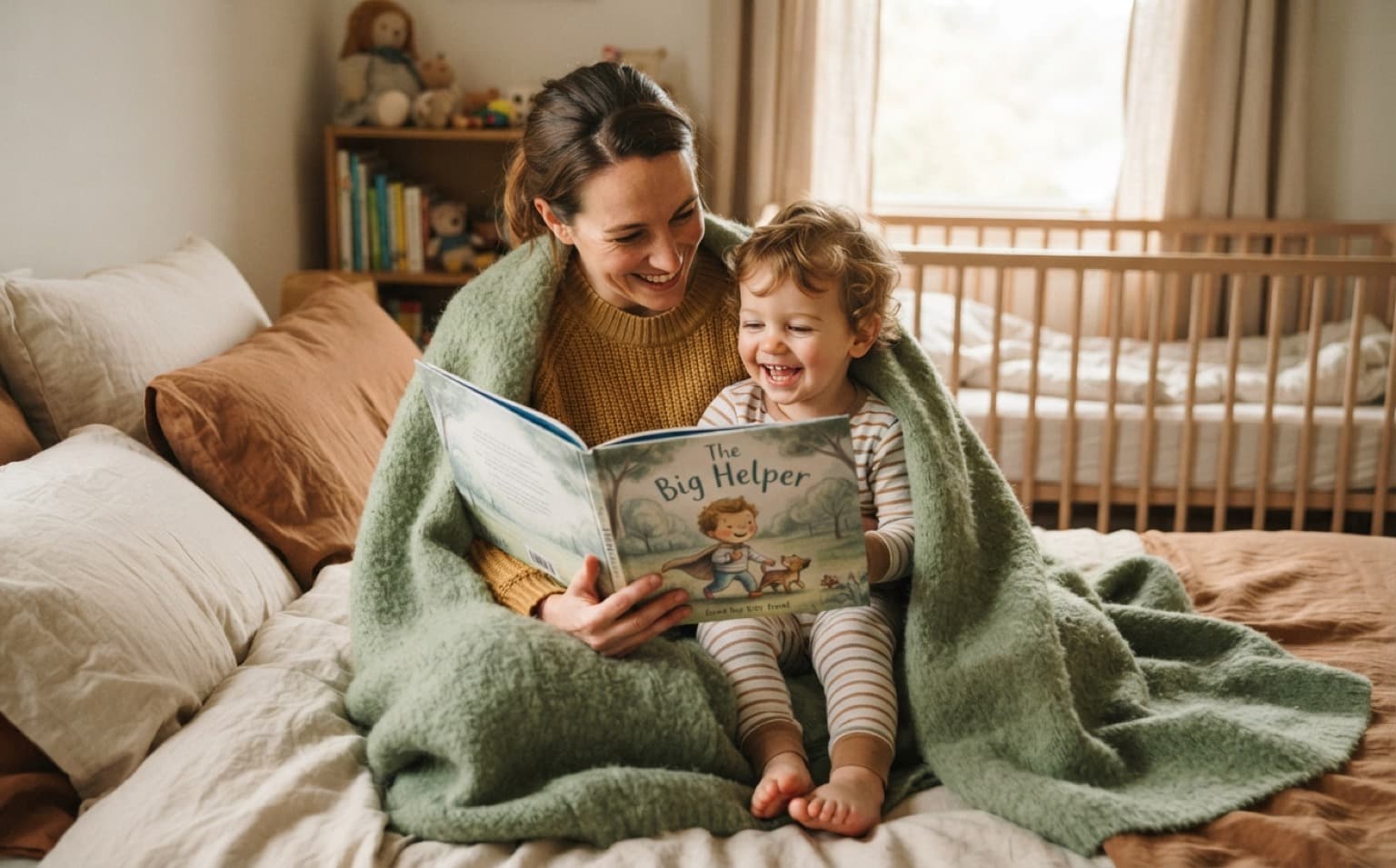
Your firstborn is currently the centre of your universe. You know their preferred way to have their toast cut, the exact pitch of their tired cry, and the bedtime stories they demand night after night. But as your pregnancy progresses, a quiet worry might be settling in: *How on earth is my toddler going to handle a new baby?*
Welcoming a second child is a beautiful milestone, but for a toddler, it is a seismic shift. Suddenly, they must share their most precious resource—you. It is entirely normal for toddlers to feel a mixture of excitement, confusion, and even a touch of grief during this transition.
Fortunately, you do not have to navigate these big emotions alone. Using new sibling books for toddlers is one of the most gentle, effective ways to prepare your little one for what is to come. By using the power of storytelling, you can help them visualise their new life, validate their complicated feelings, and celebrate the incredible role they are about to step into.
---
Why stories are a toddler’s secret weapon during transitions
Toddlers live in the concrete present. Phrases like “in a few months, you will have a baby sister” or “you are going to be a big brother” are abstract concepts to a two- or three-year-old. They cannot picture how a baby will fit into their daily routine, which can breed anxiety.
This is where bibliotherapy—using books to help children digest difficult concepts and emotions—comes in. High-quality storybooks do several things at once:
* They make the abstract concrete: Seeing pictures of babies sleeping, crying, and being fed helps toddlers understand what babies actually *do* (and, crucially, what they *cannot* do yet). * They normalise mixed emotions: A good story does not just paint a picture of perfect harmony. It acknowledges that sometimes babies cry loudly, and sometimes big siblings feel left out or cross. * They provide a safe space for conversation: Whilst reading, your toddler might point to a character and say, “He looks sad.” This is often their way of testing the water to see if it is okay for *them* to feel sad about the baby, too.
---
What to look for in new sibling books for toddlers
When searching for the perfect books to help your toddler prepare, it is easy to get overwhelmed by the sheer volume of titles available. To find stories that truly support your child’s emotional journey, look for narratives that offer:
1. Honest expectations Many traditional books portray the new baby as an instant playmate. In reality, a newborn is a sleepy, loud, demanding little creature who cannot play tag or share toys. Look for books that honestly depict the early weeks. When children expect a crying baby rather than a playground companion, they are far less likely to feel disappointed when the baby arrives.
2. Validation of "thorny" feelings It is vital that your toddler knows they are allowed to feel angry, jealous, or overwhelmed. Stories that show a character feeling cross when Mum is busy feeding the baby, followed by a reassuring hug from Dad, teach your toddler that their secure attachment to you is not broken, even when your hands are full.
3. A focus on the toddler’s unchanged value Your toddler needs to know that whilst their world is changing, your love for them is constant. The best books emphasize that they are still your special little boy or girl, and that their place in the family is completely secure.
---
The magic of personalisation in sibling transitions
Whilst generic books about becoming a big brother or sister are helpful, they can sometimes feel a bit distant. Your toddler might not see themselves in a cartoon bunny or a character named Leo.
This is where personalised children's books change the game.
Imagine reading a story where the main character has your toddler’s name, looks just like them, lives in a house that resembles yours, and even has a pet dog that looks exactly like your family retriever. Suddenly, the story is not about an imaginary child; it is a rehearsal for *their* actual life.
By customising the narrative, you can address the specific details of your family’s transition:
* The birth plan: You can write a story about who will look after them whilst Mum and Dad are at the hospital (e.g., "Grandma is coming to stay, and you will make blueberry pancakes together!"). * Specific routines: If your toddler loves going to the park on Saturday mornings with Dad, build that exact routine into the book to show them that these special moments will still happen. * The baby’s name: If you have already chosen a name, introducing it early through a personalised book helps the baby feel like a real family member before they even arrive.
To make this transition even more tangible, you can create photo storybooks that blend real-life family photographs with beautifully illustrated backdrops. Seeing a real photo of themselves holding their favourite teddy bear next to an illustration of their new baby brother creates an incredibly powerful emotional anchor.
---
How to craft a custom transition story with TurtleTime
At TurtleTime, we believe that the best stories are the ones written by the people who know your child best: you. Our bedtime story generator allows you to co-create a therapeutic, engaging story tailored precisely to your toddler’s needs.
Here is how you can design a story that supports your toddler through this major milestone:
Step 1: Identify the primary worry Observe your child’s behaviour. Are they clinging to you more than usual? Are they asking who will tuck them in when the baby is here? Use these clues to shape the theme of your story. If they are worried about bedtime, make the climax of the story a cosy, three-way cuddle at bedtime, proving that there is plenty of room for everyone.
Step 2: Highlight their unique "superpowers" Toddlers love having jobs and feeling capable. In your story, highlight things your toddler is already great at—like singing silly songs, building tall towers, or finding lost socks. Frame these as their "Big Sibling Superpowers" that will help bring smiles to the baby’s face.
Step 3: Keep it low-pressure Be careful not to burden your toddler with too much responsibility in the narrative. They are still a baby themselves. Frame their role as a "helper" rather than a "carer." For example, their job might simply be to choose which blanket the baby wears, or to sing their favourite nursery rhyme when the baby has the hiccups.
---
Practical tips for reading new sibling books together
Once you have your book in hand, how you read it matters just as much as the words on the page. Here are a few tips to maximise the therapeutic value of your reading sessions:
1. Follow their lead: If your child wants to stop on a page where the mother is holding the baby and ask, "Where am I?", do not rush them. Use it as an opportunity to say, "You are right next to Mum, helping to pat the baby's back." 2. Keep it low-key: Read these stories during calm, connected moments—not right after a tantrum or when you are rushing out the door. Bedtime is often the perfect window for these tender conversations. 3. Encourage roleplay: After reading, grab a doll or a soft toy. Let your toddler practice "gentle hands," wrapping the doll in a blanket, or pushing them in a toy pram. This physical play helps bridge the gap between storytime and real life.
A reassuring word for expecting parents
It is completely natural to feel a pang of guilt about changing your firstborn’s world. You might worry that you are taking something away from them. But remember: whilst you are ending the chapter of them being an only child, you are giving them one of the greatest gifts of their life—a sibling.
With a little preparation, plenty of patience, and the comforting embrace of personalised stories, your toddler will not just adjust to their new sibling; they will welcome them with open, excited arms.
Make tonight's story
Ready to help your toddler prepare for their biggest adventure yet? Create a beautiful, personalised story that stars your firstborn as the hero of their new family chapter. Use our intuitive tool to design a book that speaks directly to their heart.
Mark the moment with their own book
Big days feel smaller when your child is the hero. Upload a photo and we'll illustrate a story just for them.