
Milestones · 18 July 2026
New Sibling Children's Books: What Parents Need to Know in 2026
Welcoming a new baby is a beautiful yet overwhelming milestone for your firstborn. Discover how modern sibling books can ease this transition and help your child feel secure.
Mark the moment with their own book
Big days feel smaller when your child is the hero. Upload a photo and we'll illustrate a story just for them.
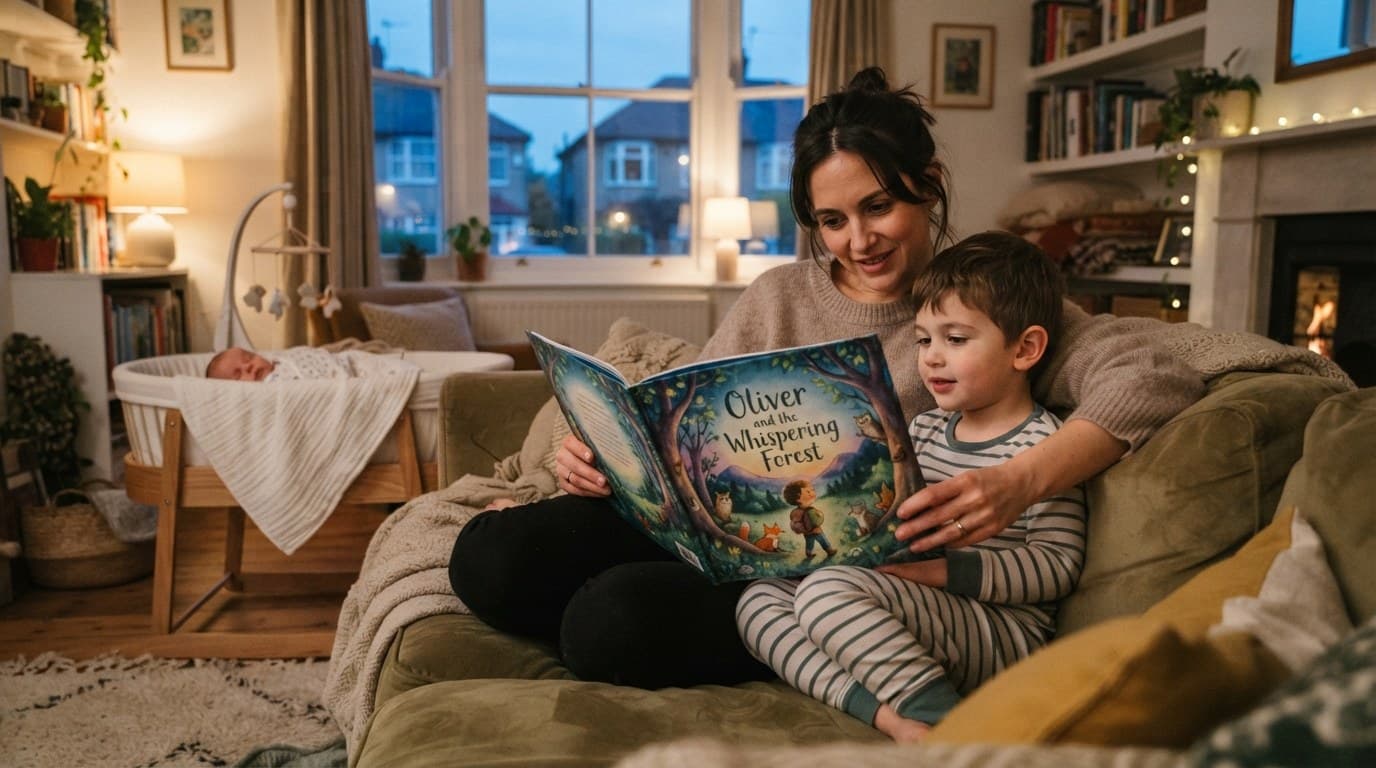
Welcoming a new baby into the family is one of life’s most beautiful milestones. But for a young child who has spent their entire life as the centre of your universe, the arrival of a brother or sister can feel like a seismic shift. It is a time filled with excitement, but also with quieter, more complex emotions: confusion, jealousy, and the worry of being replaced.
Historically, parents turned to a standard new sibling children's book to help prepare their little ones. However, as we navigate 2026, the way we approach these family transitions has evolved. Parents are moving away from overly simplified stories that promise instant best-friendship, opting instead for narratives that offer emotional honesty, validation, and deep personal reassurance.
Here is what parents and grandparents need to know about choosing and using sibling books today to support your firstborn through this monumental life change.
---
The Shift Towards Emotional Honesty in 2026
In the past, many children’s books about welcoming a new baby followed a predictable, sugar-coated arc. The baby arrives, the older sibling is instantly delighted, they hold hands, and everyone lives happily ever after.
Modern child psychology has shown us that this unrealistic portrayal can sometimes backfire. When a toddler or preschooler feels resentment, anger, or boredom because the new baby 'does nothing but cry and sleep', reading a book where the main character is perfectly happy can make them feel isolated or guilty about their own very normal feelings.
In 2026, the best children's books focus on validation. They acknowledge that babies can be noisy, that they take up a lot of Mum and Dad’s time, and that it is perfectly okay to feel a little bit cross or sad about it. By naming these feelings, we give children the permission to express them safely, rather than bottling them up into challenging behaviours.
---
Choosing the Right Sibling Book by Age
Not all sibling books are created equal, and a story that comforts a five-year-old might completely baffle a two-year-old. Matching the book’s complexity to your child's developmental stage is key to making the transition smoother.
Toddlers (Aged 1 to 3) At this age, children live entirely in the present moment. They cannot fully grasp the concept of a baby living inside a tummy, nor can they picture what life will look like in six months. * What to look for: Books with clear, simple language and concrete concepts. Focus on physical changes they can see (the baby sleeping in a cot, sitting in a pram) and practical ways they can help (bringing a nappy, singing a song). * The core message: "You are still my special little one, and my love for you hasn’t changed."
Preschoolers (Aged 3 to 5) Preschoolers have richer imaginations but are also highly prone to magical thinking. They might worry that the baby will take their toys, or that they are being replaced because they were 'bad'. * What to look for: Stories that explore the mixed emotions of waiting, sharing attention, and adjusting to a new routine. Look for books that show the baby growing over time, helping the child understand that while the baby is small now, they will eventually be a playmate. * The core message: "It is okay to feel sad or angry sometimes. We are a team, and we will figure this out together."
School-Aged Children (Aged 5 and up) Older children can understand the biological reality of a new baby and can take pride in their growing independence and role as a big brother or sister. * What to look for: Books that emphasise their unique position as a mentor, teacher, and protector. They can handle more nuanced storylines about family dynamics and the history of when *they* were a baby. * The core message: "You have a very important, active role in this family that only you can fill."
---
The Power of Personalisation: Making Your Child the Hero
One of the most significant advancements in children's literature is the ability to tailor stories directly to a child's unique situation. When a child is facing a major life transition, seeing themselves directly reflected in a story can have a profound therapeutic effect.
This is why Personalised children's books have become such an invaluable tool for modern parents. Rather than reading about a generic character who has a new baby sister, your child can read a story where *they* are the main character, navigating the exact changes happening in their real-life home.
Taking this a step further, the rise of Photo storybooks allows you to turn your child's real photo into beautifully illustrated storybook pages. At TurtleTime, we have designed a gentle, magical way to help children process these milestones. By transforming a simple photo of your child into a beautifully rendered, illustrated character, they can see themselves holding the baby, sitting snugly with their parents, and feeling secure in their changing world. Our stories also feature soothing read-aloud narration and the option to print a beautiful, keepsake hardcover book to cuddle up with at bedtime.
Seeing their own face on the page alongside a reassuring message of unconditional love helps ground a child, reinforcing the fact that their place in the family is safe, secure, and entirely irreplaceable.
---
How to Use Stories to Ease the Transition: 4 Practical Tips
Simply reading a book aloud is wonderful, but how you engage with your child during storytime can make all the difference. Here are four practical ways to use books as a bridge of connection:
1. Protect Your One-on-One Reading Time When the baby arrives, your time will be stretched thin. Try to establish a sacred, uninterrupted reading routine with your eldest child. Even ten minutes of quiet cuddle time at bedtime, focused solely on them, acts as an emotional anchor. It reassures them that despite the chaos of newborn life, their special bond with you remains intact.
2. Don’t Force the Moral Let the story do the heavy lifting. You don't need to stop on every page to ask, "See? The big brother is being nice, are you going to be nice to the baby?" This can feel like pressure or a lecture. Instead, let them absorb the story naturally. If they want to talk about it, they will.
3. Customise the Narrative to Your Family Every family is beautifully unique. Perhaps you are welcoming twins, navigating a blended family, or adopting. Standard off-the-shelf books don't always capture these specific journeys. Using a smart Bedtime story generator allows you to co-create a story that fits your precise family structure, addressing your child's specific worries—whether that is sharing their favourite teddy bear or adjusting to a new bedroom.
4. Revisit the Story of Their Own Babyhood Alongside reading books about the new baby, spend time looking at photos and reading stories about when *they* were a newborn. Show them how small they were, how much they cried, and how lovingly you cared for them. This helps them understand that the intense care the new baby is receiving isn't a sign of favoritism, but simply what all tiny babies need to grow.
---
Common Pitfalls to Avoid
When choosing a new sibling children's book, keep an eye out for these common pitfalls: * Over-promising playfulness: Avoid books that depict the older sibling playing football or hide-and-seek with a newborn. This can lead to disappointment when the real baby arrives and does little more than sleep and cry. * Shaming negative emotions: Avoid books where the older sibling is scolded or punished for feeling jealous. The narrative should always offer a safe space for those feelings to exist without judgement. * Too much text, too soon: If your child is feeling anxious or overwhelmed, their attention span might be shorter than usual. Keep the stories light, engaging, and visually comforting.
---
A Reassuring Step Forward
Welcoming a new sibling is a journey of growth for the entire family. It requires patience, extra cuddles, and a lot of reassurance. By choosing the right stories—ones that validate your child's feelings, celebrate their unique role, and place them at the very heart of the narrative—you can turn a time of uncertainty into a beautiful chapter of shared connection.
Remember, the goal is not to raise a child who never feels jealous or sad about the new baby. The goal is to raise a child who knows that whatever they are feeling, they are safe, loved, and heard.
---
Make tonight's story
Help your child feel incredibly special and secure during this big transition. With TurtleTime, you can create a personalised, illustrated adventure starring your child’s real face. Choose a soothing theme, enjoy the gentle read-aloud narration, and even order a beautiful hardcover print to treasure forever.
[Try TurtleTime for free today—no credit card required.](https://turtletime.ai)
Make tonight's story
Upload a photo, pick a theme, and read a brand-new illustrated adventure aloud in about a minute — create your free story.
Mark the moment with their own book
Big days feel smaller when your child is the hero. Upload a photo and we'll illustrate a story just for them.