
Guides · 10 July 2026
Reading Confidence in Children: A Balanced View on AI and Bedtime
Discover how to build reading confidence in children by balancing traditional bedtime routines with modern AI tools. Learn practical tips to make reading a joyful, stress-free habit.
Ready to make your first book?
Upload a photo, choose a theme, and preview a complete illustrated story in about a minute — no card needed.
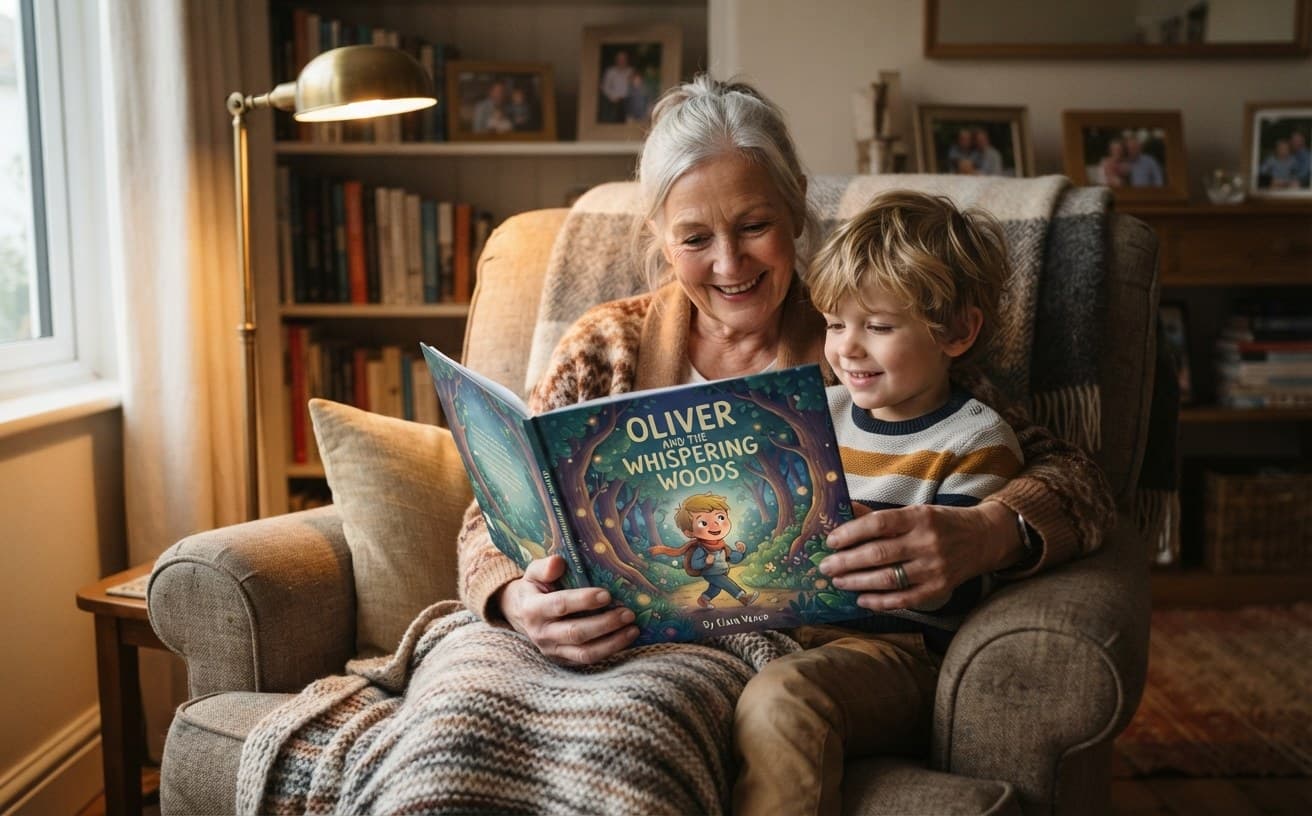
For many parents and grandparents, bedtime is a sanctuary. It is that quiet, golden hour at the end of a chaotic day when the world slows down, the screens are supposed to go off, and we settle down to read. But if you have a child who struggles with reading, this peaceful ritual can quickly turn into a battleground of frustration, tears, and anxiety.
When a child lacks confidence in their reading abilities, being asked to read aloud—or even to follow along—can feel like a test they are destined to fail. As caregivers, we want to foster a love of books, but the pressure to meet school reading levels can sap the joy right out of the room.
Recently, artificial intelligence (AI) has entered the parenting conversation, promising everything from automated homework help to custom bedtime tales. But is AI a genuine tool for building reading confidence in children, or is it just another screen distraction pulling us away from traditional, cosy bonding?
Let’s take an honest, balanced look at how we can combine the warmth of traditional storytime with the smart customisation of modern technology to nurture a confident, happy young reader.
---
Understanding Reading Confidence in Children
Before we look at tools, it helps to understand what reading confidence actually is. It isn’t just about a child's ability to decode words on a page or speed through a sentence. True reading confidence is an emotional state. It is the belief that "I can do this, and even if I make a mistake, I am safe to try."
When children lack this confidence, they often display avoidance behaviours: * Fidgeting or asking for drinks of water to delay reading time. * Choosing books that are far below their actual ability level because they feel 'safe'. * Becoming visibly distressed, angry, or shut down when they encounter an unfamiliar word. * Relying entirely on memorising books rather than attempting to read them.
To break this cycle, we need to shift the focus from *performance* to *pleasure*. Children build confidence when they feel a sense of ownership over their stories, when the pressure to perform is removed, and when they can see the direct relevance of the book to their own lives.
---
The Bedtime Dilemma: Screens vs. Pages
As parents and grandparents, we are bombarded with advice telling us to banish digital devices from the bedroom. We worry that technology makes children passive, shortens their attention spans, and disrupts their sleep patterns. These are incredibly valid concerns. A flashing, noisy tablet app designed to keep a child hooked with cheap dopamine hits is not a friend to bedtime or reading confidence.
However, technology is not a monolith. There is a vast difference between a passive, fast-paced video game and a thoughtful, interactive literary tool.
When used mindfully, modern technology can act as a scaffolding. It can support a child who is struggling, helping them bridge the gap between being a passive listener and an active, confident reader. The key is balance: using technology as a launchpad, not a replacement for human connection.
---
How AI Can Support Reading Confidence: The Balanced View
So, how can AI actually help build reading confidence in children? When applied thoughtfully, artificial intelligence offers three unique advantages that traditional books sometimes struggle to provide:
1. High-Interest, Low-Frustration Personalisation One of the biggest hurdles in reading development is finding books that match both a child's reading age and their actual interests. A seven-year-old who is struggling might only be able to read books designed for five-year-olds. Understandably, they find these books babyish and boring, which hurts their self-esteem.
AI allows for instant customisation. By tailoring a story specifically to a child's current obsession—whether that is space dinosaurs, baking, or gymnastics—we instantly boost their motivation. When motivation is high, children are far more willing to persist through challenging words.
2. The Power of the 'Mirror Effect' Psychologists have long known that children engage more deeply with stories when they can see themselves reflected in the characters. Traditional personalised children's books have done this for years by printing a child's name in the text.
AI takes this a step further. Modern photo storybooks can now take a simple photo of your child and transform it into beautiful, illustrated artwork throughout the book. Seeing their own face as the brave knight, the clever scientist, or the curious explorer does something magical to a child’s confidence. They are no longer just an observer; they are the hero of the narrative. This visual connection makes the story feel incredibly high-stakes and exciting, encouraging them to lean in and read along.
3. Accessible Narration and Pronunciation Support When a child is stuck on a word, they often stop reading altogether. AI-powered read-aloud narration can act as a gentle, non-judgmental guide. Unlike a tired parent who might occasionally sigh or show frustration (we’ve all been there!), an AI narrator is infinitely patient. A child can listen to a sentence read aloud, hear the correct pronunciation and expression, and then try reading it themselves. This modelling is crucial for developing fluency.
---
Practical Ways to Integrate AI into Bedtime Without Losing the Magic
If you want to explore using technology to support your child's reading journey, here is a practical, balanced roadmap to keep the experience warm, cosy, and effective:
Use Co-Creation to Spark Curiosity Before you even open a book, involve your child in the creation of the story. You can use a simple bedtime story generator to input their favourite themes, a moral you want to talk about, or even a challenge they faced at school that day. Sitting together and deciding what happens next turns reading from a passive task into an exciting act of creation.
Keep the Human Connection at the Centre AI should never be left to read to your child while you leave the room. The magic of bedtime reading is your presence. Sit side-by-side. Let the AI voice narrate a page while you both look at the pictures, then pause the audio and ask your child: "What do you think our hero will do next?" Or, read a sentence together, mimicking the expression of the narrator.
Transition from Screen to Paper While digital stories are fantastic for quick creation and interactive narration, there is still an irreplaceable magic to physical books. The tactile feel of turning a page, the smell of the paper, and the absence of blue light are essential for winding down.
Look for tools that bridge this gap. For example, TurtleTime allows you to create personalised stories using your child's real photo likeness and enjoy them with read-aloud narration on a screen—but they also offer the option to have your unique creation printed as a high-quality, physical hardcover book. This gives you the absolute best of both worlds: the high-tech, highly engaging personalisation of AI, delivered in a beautiful, traditional format that can sit proudly on their bedside table.
---
The Golden Rule: Keep it Low-Pressure
No matter what tools you choose—whether you are reading a classic library book, a modern personalised tale, or an AI-generated adventure—the golden rule of building reading confidence is to keep bedtime entirely pressure-free.
If your child is tired, don't force them to read to you. Read *to* them. Let them simply enjoy the rhythm of your voice and the safety of your company. Building a positive association with books is far more important than forcing them to decode three more words when they are exhausted. When books represent warmth, safety, and exciting adventures, confidence will naturally follow.
---
Make tonight's story
If you would like to see the look of wonder on your child's face when they see themselves inside a beautifully illustrated adventure, why not try TurtleTime tonight?
You can create a completely personalised storybook featuring your child's likeness and listen to the read-aloud narration together. It is entirely free to try, and you don't need to enter a credit card to get started. Create your first story in just a few clicks and bring a little extra magic to bedtime tonight.
Make tonight's story
Upload a photo, pick a theme, and read a brand-new illustrated adventure aloud in about a minute — create your free story.
Ready to make your first book?
Upload a photo, choose a theme, and preview a complete illustrated story in about a minute — no card needed.