
Bedtime · 6 July 2026
Bedtime routines for anxious children: story ideas that calm
Bedtime can be a mountain to climb for an anxious child. Discover how gentle plots, predictable structures, and personalised stories can soothe their evening worries and help them drift off to sleep.
Create tonight's bedtime book
Upload a photo, pick a calming theme, and read a brand-new illustrated story aloud in about a minute — free to preview.
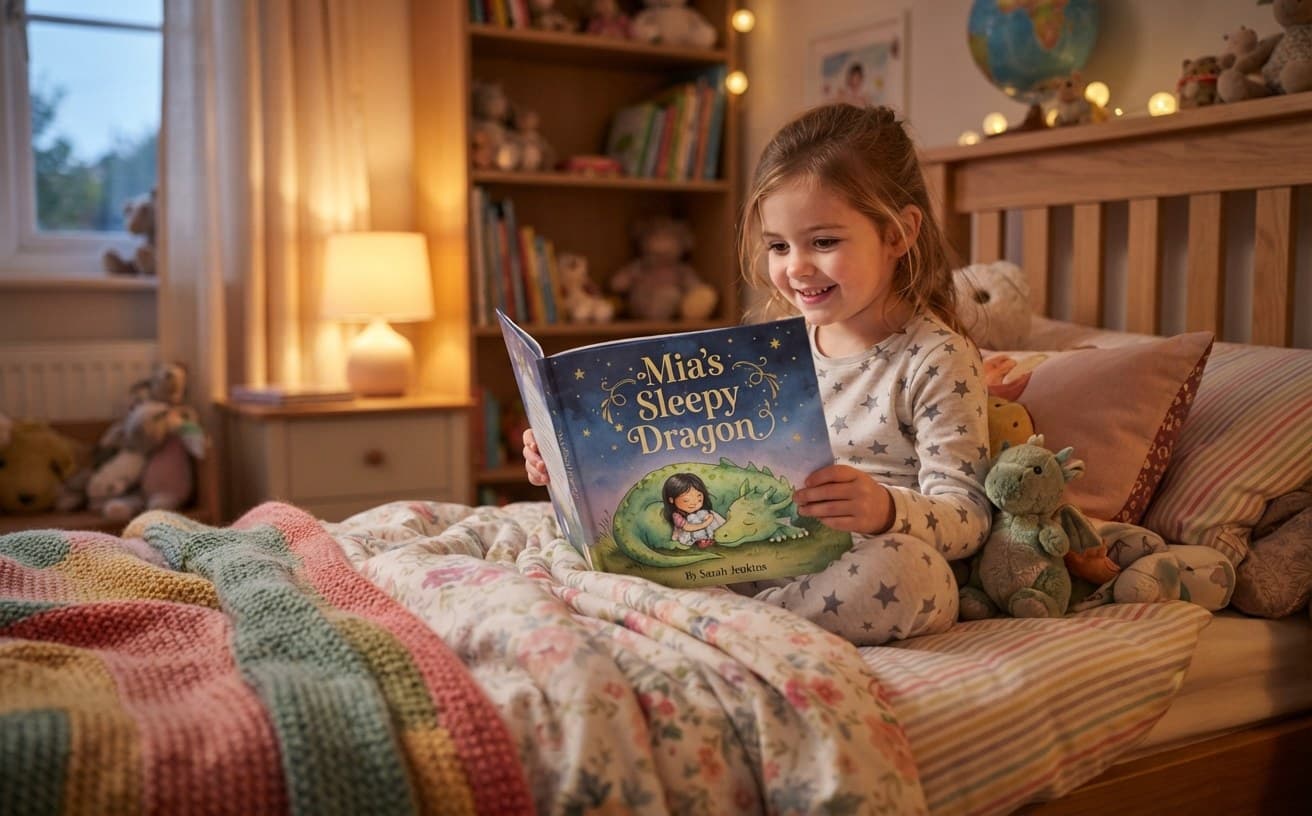
For many parents, the setting of the sun brings a familiar, quiet dread. While the rest of the world is winding down, your child’s mind is gearing up. The ‘what-ifs’ start to whisper, the shadows in the corner look a little too long, and suddenly, the simple transition from daytime to sleep feels like climbing a mountain.
Bedtime anxiety is incredibly common, but that doesn't make it any easier to navigate. When a child’s nervous system is on high alert, standard sleep hygiene tips—like dimming the lights or avoiding screens—often aren't enough. They need a bridge to cross from the busy, sometimes overwhelming daytime world into the quiet safety of sleep.
That bridge is story.
By using gentle plots, predictable structures, and the same familiar hero night after night, you can create a sensory anchor that quietens their racing thoughts. Here is how to craft the perfect bedtime routine for your anxious child, using stories that truly calm.
---
Why standard stories can sometimes trigger anxiety
Before we look at what works, it is helpful to understand why some beloved children’s classics might actually keep your anxious child awake.
Most traditional stories rely on conflict. There is a problem to be solved, a monster to defeat, a lost puppy to find, or a moment of tension before the happy ending. For a relaxed child, this narrative arc is exciting. For an anxious child, even minor fictional jeopardy can trigger a physical fight-or-flight response. Their heart rate rises, cortisol spikes, and the sleep window slams shut.
To soothe an anxious mind, we need to throw out the traditional dramatic arc. We aren't looking for adventure, mystery, or excitement. We are looking for rhythm, safety, and absolute predictability.
---
The three pillars of a calming bedtime story
When you are choosing or creating stories for a worried child, try to keep these three pillars in mind:
1. Gentle, low-stakes plots Nothing exciting should happen. In fact, the best bedtime stories for anxious children are beautifully, wonderfully boring. The plot should focus on gentle, sensory experiences: a walk through a quiet forest, a slow boat ride down a calm river, or a sleepy animal preparing its nest for winter. The focus should be on sights, sounds, and textures—the cool breeze, the soft moss, the rhythmic sound of waves—rather than action.
2. A highly predictable structure Anxiety thrives on the unknown. Therefore, calm thrives on predictability. Using a repetitive structure helps children anticipate what is coming next, which signals to their brain that they are safe. You might use a countdown structure (e.g., visiting five sleepy animals, one by one) or a repetitive refrain that appears on every page. When a child knows exactly what is coming next, their mind can finally let go of its vigil.
3. The same hero every night Introducing a new character every evening requires cognitive effort. Your child has to learn who they are, what they look like, and whether they are safe. By keeping the hero of the story the same every night, you remove that hurdle. The hero becomes a trusted friend who accompanies them into sleep.
And who is the ultimate hero for a child who needs to feel safe? They are.
---
The power of a bedtime story with child's name
There is a unique magic in hearing your own name spoken in a calm, loving voice. When you read a bedtime story with child's name woven into the narrative, it does something profound to their sense of security.
Firstly, it grounds them in the present moment. Anxious minds are usually time-travelling—worrying about what happened at school today or what might happen tomorrow. Hearing their own name acts as a gentle anchor, pulling them back to the safety of their bedroom, wrapped in their duvet.
Secondly, it places them directly inside a safe, controlled world. In the story, they are walking through a peaceful meadow where nothing bad can happen. They are the ones being tucked into a cloud, or being watched over by a friendly, sleepy dragon. This sense of agency and safety in a fictional world translates directly to how they feel in their own bed.
Using Personalised children's books is one of the easiest ways to establish this routine. When your child can see themselves in the illustrations and hear their name on every page, the barrier between the story and their reality dissolves, allowing the calm of the book to become their own calm.
---
Three gentle story ideas to try tonight
If you are making up stories at the bedside, or looking for themes to prompt your imagination, here are three gentle concepts designed specifically to lower anxiety:
Idea 1: The Balloon Journey * The Concept: Your child steps into a cosy, warm hot air balloon. The balloon slowly rises into a soft, twilight sky. * The Narrative: As the balloon drifts over familiar landscapes (their school, their park, their house), they look down and see everything is quiet and sleeping. With every breath they take, the balloon drifts a little further. * The Calm Factor: This story physically distances the child from their daily worries. Looking down from above makes their problems feel small and manageable. It ends with the balloon gently landing back in their own bedroom, right into their bed.
Idea 2: The Sleepy Forest Walk * The Concept: A gentle walk down a soft, mossy path in a quiet woodland where everyone is getting ready for bed. * The Narrative: Your child meets different woodland creatures. A squirrel winding down in its nest, a badger curling up in its burrow, a deer resting under a canopy of leaves. Each animal whispers a sleepy greeting to your child. * The Calm Factor: This utilizes the power of social modeling. Seeing other creatures safely and peacefully preparing for sleep reassures the child that it is safe for them to do the same.
Idea 3: The Cloud Weaver * The Concept: A friendly character who lives in the sky and weaves soft, protective blankets out of night clouds. * The Narrative: The cloud weaver crafts a special, invisible blanket just for your child, woven with quietness, soft dreams, and safety. They gently drape it over your child, keeping all worries outside. * The Calm Factor: This provides a tangible, sensory metaphor for protection. Children can imagine the physical weight of the calm blanket keeping them safe through the night.
---
How to build these stories into your routine
Creating these bespoke narratives night after night can feel daunting, especially when you are tired yourself. This is where modern tools can support your parenting journey.
If you want to create a highly specific, repetitive story tailored to your child's exact worries, using a Bedtime story generator can be a lifesaver. You can input their name, their favourite calming things (like a soft toy or a specific colour), and generate a gentle, low-stakes story designed to soothe them to sleep.
For children who struggle with separation anxiety at bedtime, seeing familiar faces can be incredibly grounding. Using Photo storybooks that feature real pictures of you, your child, or even the family pet in a dreamy, illustrated landscape can reassure them that they are connected to you, even when the lights go out.
---
A few extra tips for the anxious bedtime
* The 'Worry Box' ritual: Before the story starts, ask your child if they have any worries they want to put away. Write them down on a scrap of paper and put them in a physical box. Promise them that you will keep the worries safe in the box overnight, so they don't have to carry them into sleep. They can have them back in the morning if they want them (they rarely do). * Slow your cadence: As you read, consciously slow down your voice. Mimic the slow, deep breathing of someone who is fast asleep. Pause between sentences. Your child’s nervous system will naturally try to match your rhythm. * Keep the ending the same: Always end your story with the same phrase. It could be as simple as: *"And just like that, [Name] closed their eyes, took a deep, slow breath, and fell fast asleep. Safe, warm, and loved."*
Bedtime doesn't have to be a battleground. With a little structure, a lot of gentleness, and a story that speaks directly to their heart, you can help your child find the peaceful sleep they deserve.
Make tonight's story
Ready to create a beautiful, calming routine for your little one? Use our simple tool to craft a bespoke bedtime story with child's name and watch them drift off to sleep with ease tonight.
Create tonight's bedtime book
Upload a photo, pick a calming theme, and read a brand-new illustrated story aloud in about a minute — free to preview.