
AI & parenting · 13 July 2026
AI Story App for Toddlers: Tips That Actually Work
Discover how to use AI story apps with toddlers without the screen-time guilt. These practical, parent-tested tips will help you create cosy, interactive storytimes that support early development.
Try AI storytelling on your terms
You stay in control — pick the theme, preview every page, and only pay if you want the full book or a printed copy.
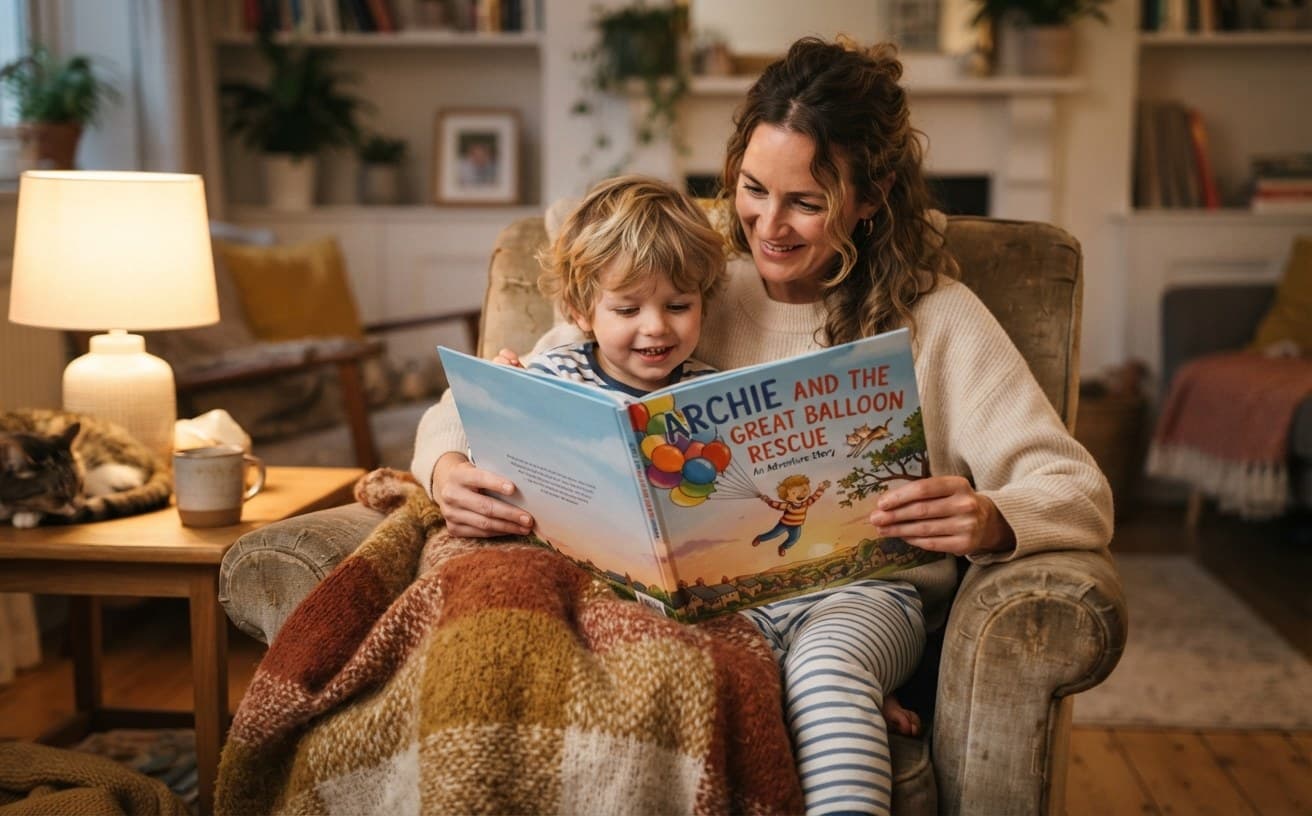
If you have a toddler, you already know that books are magic. They can calm a pre-bedtime tantrum, build a massive vocabulary, and transport your little one to worlds filled with talking animals and friendly diggers.
But you also know the reality of reading to a two-year-old. Sometimes they want to read the exact same book seventeen times in a row. Sometimes they rip the flaps off expensive lift-the-flap books. And sometimes, you are simply too exhausted at the end of a long day to put on your best 'funny voices' for the third time.
This is why many parents are turning to technology, searching for a reliable ai story app for toddlers. But let’s be honest: the phrase 'AI app for toddlers' can trigger instant parent guilt. We worry about passive screen time, overstimulation, and the loss of that sweet, slow-paced bedtime connection.
It doesn’t have to be that way. When used mindfully, AI can be a wonderful tool for early childhood development. Here are some practical, honest tips that actually work for using AI story apps with toddlers, keeping screen-time guilt firmly at bay.
---
1. Use AI to Tackle Real-World Toddler Milestones
Toddlers live in the moment, and they learn best when stories directly mirror their daily lives. If your little one is struggling with sharing, potty training, or starting nursery, a custom story can work wonders.
Traditional books on these topics are great, but they don't always match your child's specific situation. This is where a modern bedtime story generator becomes incredibly useful.
How to make this work in practice: * Be specific with your prompts: Instead of asking for a generic story about sharing, try something like: *'A story about a little boy named Leo who learns to share his favourite green toy tractor with his baby sister.'* * Keep the resolution positive and gentle: Toddlers don't need complex plots. They need to see a character feel a big emotion (like frustration), find a simple solution, and feel safe. * Reinforce it the next day: When your toddler struggles to share in real life, refer back to the story: *'Remember how Leo felt when his sister took the tractor? What did Leo do?'*
---
2. Never 'Hand and Walk Away' (The Power of Co-Reading)
The biggest mistake we can make with any digital tool is treating it as a digital babysitter, especially for under-threes. Research consistently shows that toddlers learn best from screens when an adult is actively involved—a process educators call co-viewing or co-reading.
An AI story app should be an invitation to interact, not a cue for you to check your own phone.
Interactive reading tips for toddlers: * Ask open-ended questions: Even if the app has read-aloud narration, pause it. Point to the screen and ask, *'What is the puppy doing?'* or *'Can you make a roaring sound like the dinosaur?'* * Relate the story to their world: If a character is eating an apple, say, *'Look, she has a red apple! We had crunchy green apples for lunch today, didn't we?'* * Follow their lead: If your toddler wants to linger on one page for five minutes just looking at a background butterfly, let them. The goal is engagement, not finishing the book as quickly as possible.
---
3. Bridge the Gap Between Digital and Physical
While digital apps are convenient for travel or busy afternoons, nothing quite compares to the tactile experience of a real, physical book. Toddlers love the sensory feedback of turning pages, pointing to physical illustrations, and carrying their favourite books around the house.
Fortunately, you don't have to choose between digital personalisation and physical print. Some of the best tools allow you to design a story digitally and then have it printed as a beautiful keepsake.
Using personalised children's books that feature your child’s own name and likeness can dramatically increase their engagement. When they see a character who looks just like them, their eyes light up.
For an even deeper connection, you can explore photo storybooks where your child’s actual face is illustrated into the scenes. This bridges the digital-to-physical gap perfectly: you get the creative power of AI to design the story, but the final product is a beautiful hardcover book that sits proudly on their bedroom bookshelf, completely screen-free.
---
4. Keep Sensory Stimulation Low
Many apps designed for toddlers are loud, fast-paced, and filled with flashing animations. While this might keep a child quiet, it often overstimulates their developing brains, leading to irritability and sleep disruption later on.
When choosing an AI story app, look for platforms that mimic the gentle pace of a physical picture book.
* Static or gentle illustrations: Avoid apps with constant, frantic animations. You want your child to focus on the story and the language, not the flashing lights. * Soothing narration: If the app has a read-aloud feature, ensure the voice is calm, natural, and expressive. Avoid robotic, high-pitched, or overly loud voices. * Warm colour palettes: Especially if you are reading near bedtime, look for apps that use soft, warm colours rather than harsh, bright neon screens.
---
5. Embrace Repetition (Even If It Bores You!)
It can be tempting to use an AI story app to generate a brand-new story every single night. After all, the technology makes it so easy! However, toddlers actually thrive on repetition.
Repetition builds neural pathways. When a toddler hears the same story repeatedly, they begin to predict what comes next, which builds their confidence, comprehension, and language skills.
A balanced weekly routine: * Monday: Create a new story together based on something they did that day (e.g., going to the park). * Tuesday to Friday: Re-read that exact same story. Encourage them to finish the sentences or point out familiar objects. * Weekend: Let them choose whether to read the same story again or create a new adventure.
---
How TurtleTime Can Help
If you're looking for a gentle, high-quality way to introduce AI storytelling to your toddler's routine, TurtleTime (turtletime.ai) is a lovely option designed with families in mind.
Rather than offering a bright, hyperactive screen experience, TurtleTime allows you to upload a photo of your child and transform them into the illustrated hero of their own stories. It keeps things beautifully simple:
1. Real photo likeness: Your toddler sees themselves illustrated as a brave astronaut, a friendly forest explorer, or a helpful gardener. 2. Read-aloud narration: Perfect for when your voice needs a rest, featuring warm, natural-sounding audio. 3. Optional hardcover printing: Because we know bedtime is best spent screen-free, you can easily turn any digital creation into a gorgeous, high-quality printed book to keep forever.
It’s a gentle, modern way to foster a lifelong love of reading, combining the magic of personalisation with the timeless comfort of a physical book.
---
Make tonight's story
Ready to see your little one’s face light up? You can try TurtleTime completely free today, with no credit card required. Create a personalised story, listen to the warm narration together, and see how much your toddler loves being the hero of their own bedtime adventure.
Make tonight's story
Upload a photo, pick a theme, and read a brand-new illustrated adventure aloud in about a minute — create your free story.
Try AI storytelling on your terms
You stay in control — pick the theme, preview every page, and only pay if you want the full book or a printed copy.