
AI & parenting · 1 July 2026
AI bedtime stories: what parents should know in 2026
In 2026, AI bedtime stories are everywhere. But how do they affect our children's sleep, imagination, and connection with us? Discover the balanced, honest truth about using AI at bedtime.
Try AI storytelling on your terms
You stay in control — pick the theme, preview every page, and only pay if you want the full book or a printed copy.
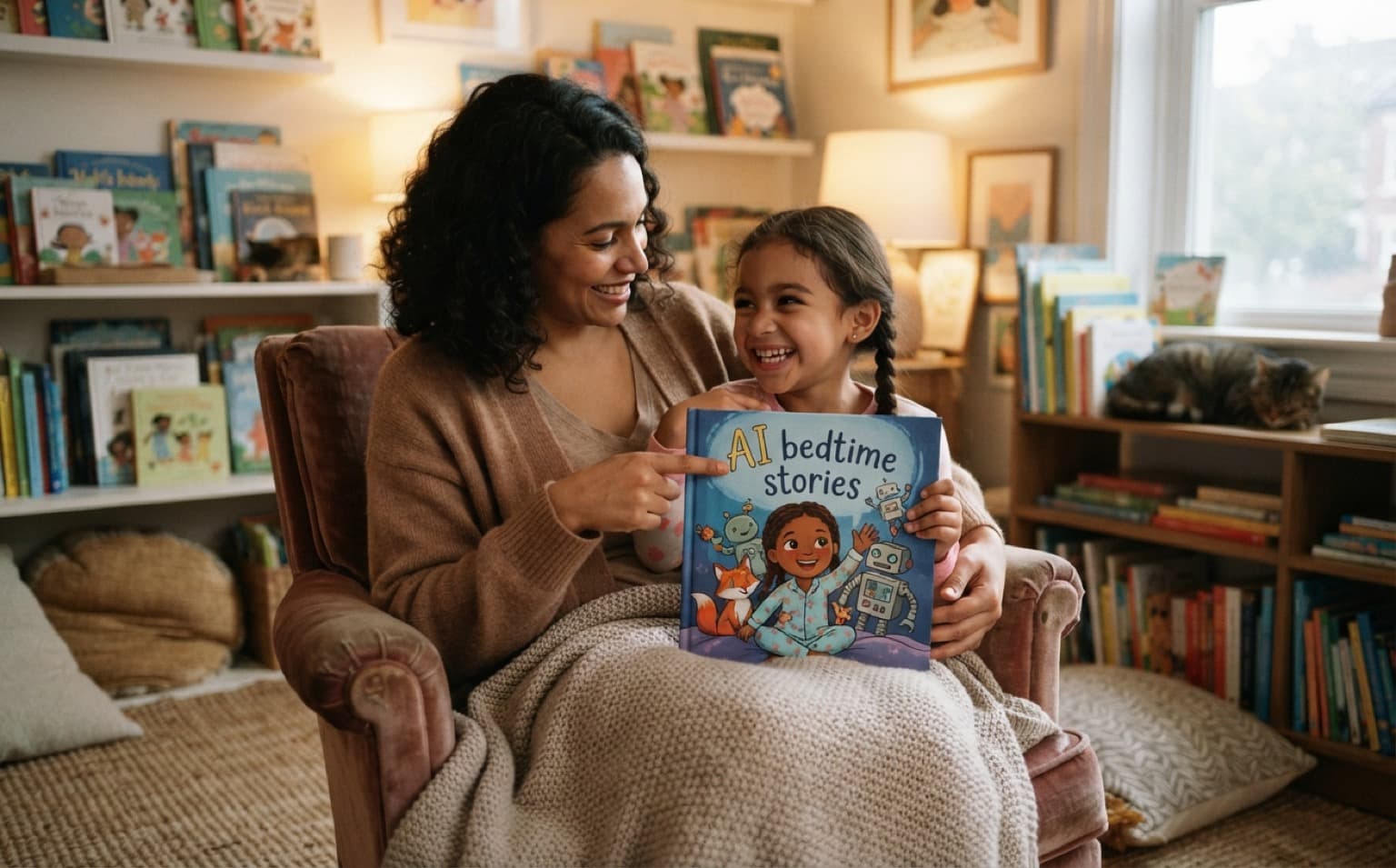
It is 7:30 pm. The teeth are brushed, the pyjamas are on, and the familiar negotiation for “just one more story” has begun. But in 2026, the book you reach for might not be sitting on a dusty wooden shelf. Instead, it might be an ai bedtime story, conjured up in seconds to address the exact events of your child’s day.
As parents, we find ourselves standing at a fascinating crossroads. Artificial intelligence has woven itself into the fabric of family life, promising to make parenting easier, more creative, and highly customised. Yet, with these innovations comes a healthy dose of parental guilt and scepticism. Is relying on an AI bedtime story generator a brilliant parenting hack, or are we outsourcing one of our most sacred daily rituals to a machine?
Let’s take a warm, honest, and balanced look at what parents need to know about AI bedtime stories today—the good, the bad, and how to strike the perfect balance for your family.
---
The magic: where AI bedtime stories truly shine
If you’ve ever found yourself reading the exact same dog-eared picture book for the forty-seventh consecutive night, you already understand the appeal of novelty. AI doesn’t just offer variety; it offers unprecedented personalisation.
1. Tailored to life’s big (and small) moments Traditional books are wonderful, but they can’t adapt on the fly. If your five-year-old had a tough day sharing toys at nursery, or is feeling anxious about a trip to the dentist tomorrow, an AI storyteller can craft a gentle narrative featuring a brave little character facing those exact challenges.
By using personalised children's books, you can weave your child’s name, their favourite cuddly toy, and their specific personality traits directly into the narrative. It transforms reading from a passive activity into an active, comforting mirror of their own world.
2. A spark for reluctant readers Not every child falls in love with reading naturally. For children who struggle to engage, seeing themselves as the hero of the adventure can be the spark that changes everything. When you combine modern technology to create custom photo storybooks, children can see illustrated versions of themselves and their families on the pages. This visual connection builds immediate engagement and fosters a deep, early love for storytelling.
3. Supporting tired parents Let’s be honest: some evenings, we are simply too exhausted to put on the dramatic voices and summon the creative energy that a great bedtime story demands. Having a collaborative partner in a bedtime story generator means you can input a few silly prompts from your child (“a astronaut turtle who loves broccoli”) and let the technology handle the heavy lifting of plot structure while you focus on the snugs.
---
The worry: when AI bedtime stories can hurt
As with any technology, the key to healthy adoption is understanding the risks. AI is a tool, and like any tool, it can be misused in ways that disrupt the very routine we are trying to protect.
1. The screen-time trap Bedtime routines are meant to wind down the nervous system, preparing young brains for deep, restorative sleep. If your child is staring at a bright smartphone or tablet screen to read an AI-generated story, the blue light can actively suppress melatonin production, making it harder for them to drift off.
* The solution: AI stories don’t have to be read off a glowing screen. You can generate the story on your phone, cast the text to a smart speaker, print the pages out, or read it aloud yourself while keeping the device facing away from your child.
2. The loss of human connection There is a worrying trend of apps designed to let an AI voice read the story *to* your child while you leave the room. While this might be tempting on incredibly busy nights, we must remember that the magic of bedtime isn't just the words on the page—it’s the warmth of your voice, the rhythm of your breathing, and the physical closeness of sitting side-by-side. AI should never replace the parent as the storyteller; it should merely act as the co-author.
3. Generic or inappropriate content Generic, public-access AI models are not built for children. They can sometimes hallucinate weird plots, use vocabulary that is far too advanced, or introduce subtle, scary elements that are entirely inappropriate for a peaceful wind-down. It is vital to use platforms specifically designed for families, with built-in safety guardrails and age-appropriate language models.
---
Finding the sweet spot: a guide to healthy moderation
How do we embrace the creative joy of AI without losing the soul of bedtime? It all comes down to setting intentional boundaries.
| The Don'ts of AI Bedtime | The Do's of AI Bedtime | | :--- | :--- | | Handing a tablet to your child and walking away. | Reading the AI-generated story aloud together, snuggled up. | | Using unregulated, open-ended AI chatbots. | Using a dedicated, child-safe bedtime story generator. | | Letting bright screens dominate the bedroom. | Keeping screens dimmed, printing stories, or using physical books. | | Replacing classic literature entirely. | Blending AI stories with traditional library books and family tales. |
Co-creation as a bonding ritual Instead of treating the AI as a vending machine that spits out a story, turn the creation process into a collaborative game. Spend five minutes before brush-and-bedtime asking your child: “What should our main character learn today?” or “What colour is the magic balloon?”
Enter these inputs together, generate the tale, and then put the device away. The act of visualising and building the story together is incredibly empowering for a child’s confidence and cognitive development.
---
Why TurtleTime does things differently
At TurtleTime, we watched the rise of AI parenting tools with both excitement and caution. We realised that parents didn’t want more screen time or cold, robotic text. They wanted a way to make bedtime feel deeply personal, warm, and magical.
That’s why our platform isn’t about replacing books; it’s about creating heirloom-quality moments. Whether you are crafting beautiful personalised children's books that you can print and hold in your hands, or transforming your weekend family photos into whimsical bedtime adventures with our photo storybooks, we ensure the human connection remains at the absolute heart of the experience.
Our stories are crafted with gentle pacing, calming vocabulary, and positive moral lessons designed to soothe active minds and prepare them for sweet dreams. No bright flashing lights, no overstimulation—just pure, modern storytelling magic.
---
The verdict for 2026
AI bedtime stories are not a replacement for parental love, nor are they a threat to traditional reading. When used mindfully, they are a spectacular addition to a parent’s toolkit. They allow us to meet our children exactly where they are, transforming their daily triumphs and worries into beautiful, comforting bedtime myths.
As you navigate parenting in this digital age, trust your instincts. Use the technology to spark imagination, but keep your arms wrapped around your little one as you read. That is a connection no algorithm can ever replicate.
Make tonight's story
Ready to bring a touch of personalised magic to your bedtime routine tonight? Create a unique, safe, and beautiful adventure for your child in just a few clicks.
Try AI storytelling on your terms
You stay in control — pick the theme, preview every page, and only pay if you want the full book or a printed copy.